MAR 2025
SPACEQUIZ EDUCATIONAL PLATFORM
The Concept
Kahoot proved that learning and competition could coexist. We wanted to push that idea further. Built as part of a university course alongside a group of classmates, this was our take on what an educational game could look like when you stopped playing it safe.
The Stack
The project was our first real experiment with Vue, Unity and Node.js, neither of which any of us had worked with before. That alone made it a challenge worth taking on. We figured out the framework as we built, which meant every feature we shipped was also a lesson learned.
The Game
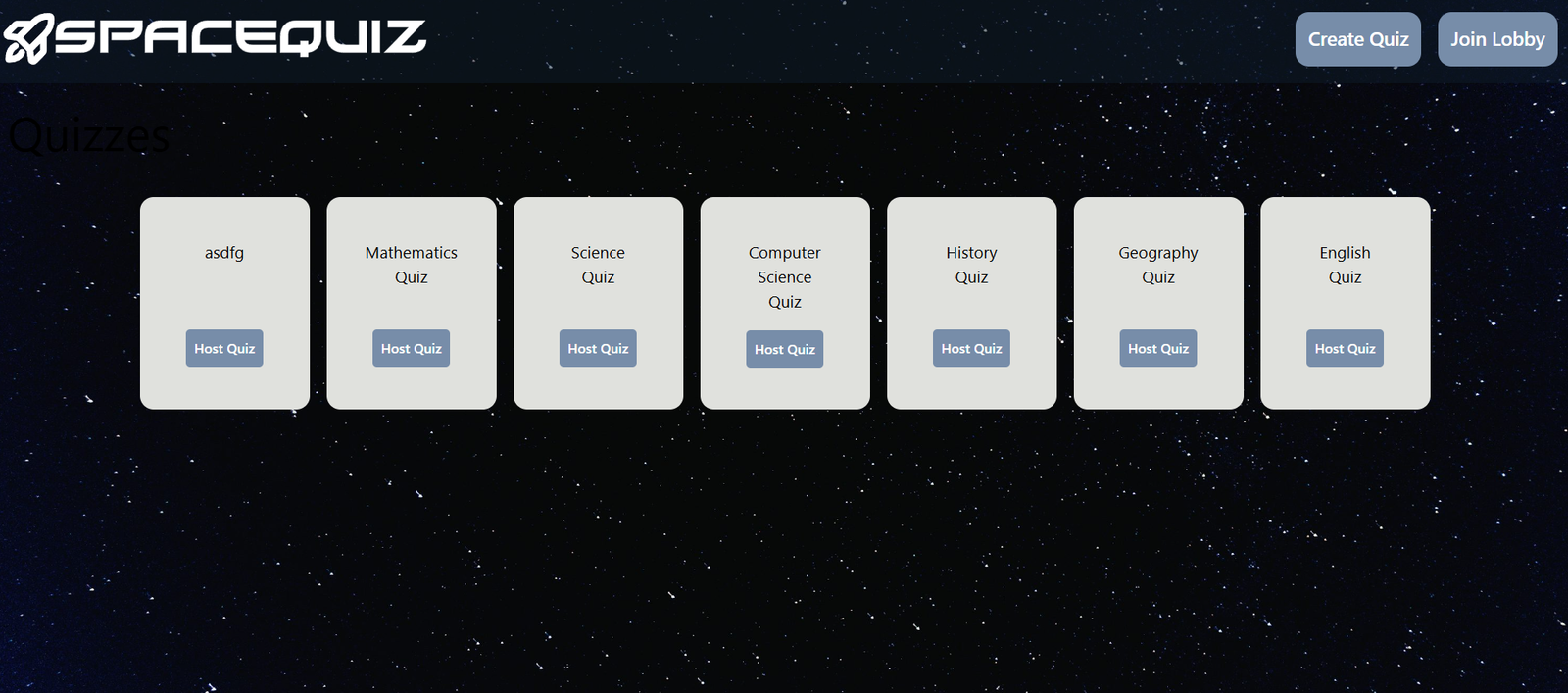
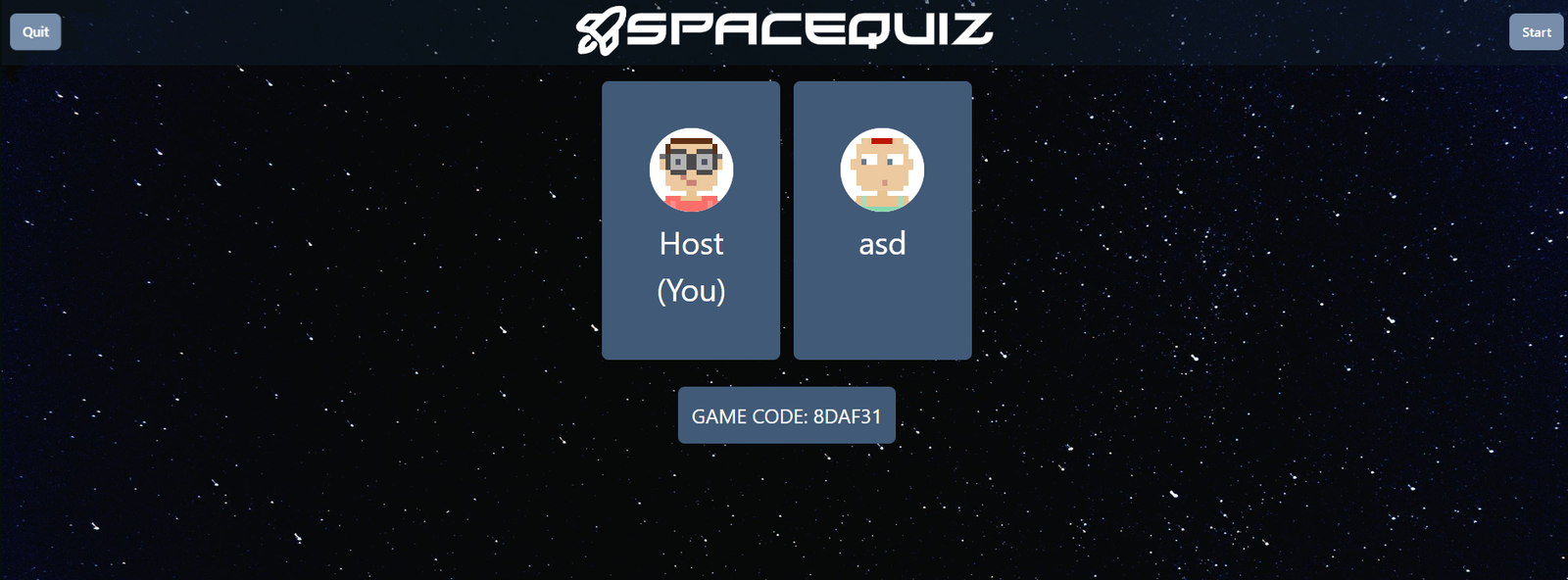
The application allowed anyone to create custom quizzes and host live lobbies for players to join together. But the gameplay loop is where it got interesting.
Instead of just answering questions one after another, players fought through a round of Space Invaders first. Enemies scaled up in number with each wave, and so did the questions that followed. Answer correctly and you earned in-game cash to upgrade your ship. Scattered across the battlefield were gameplay boosts that let you shoot faster and dodge quicker, rewarding players who stayed sharp under pressure.
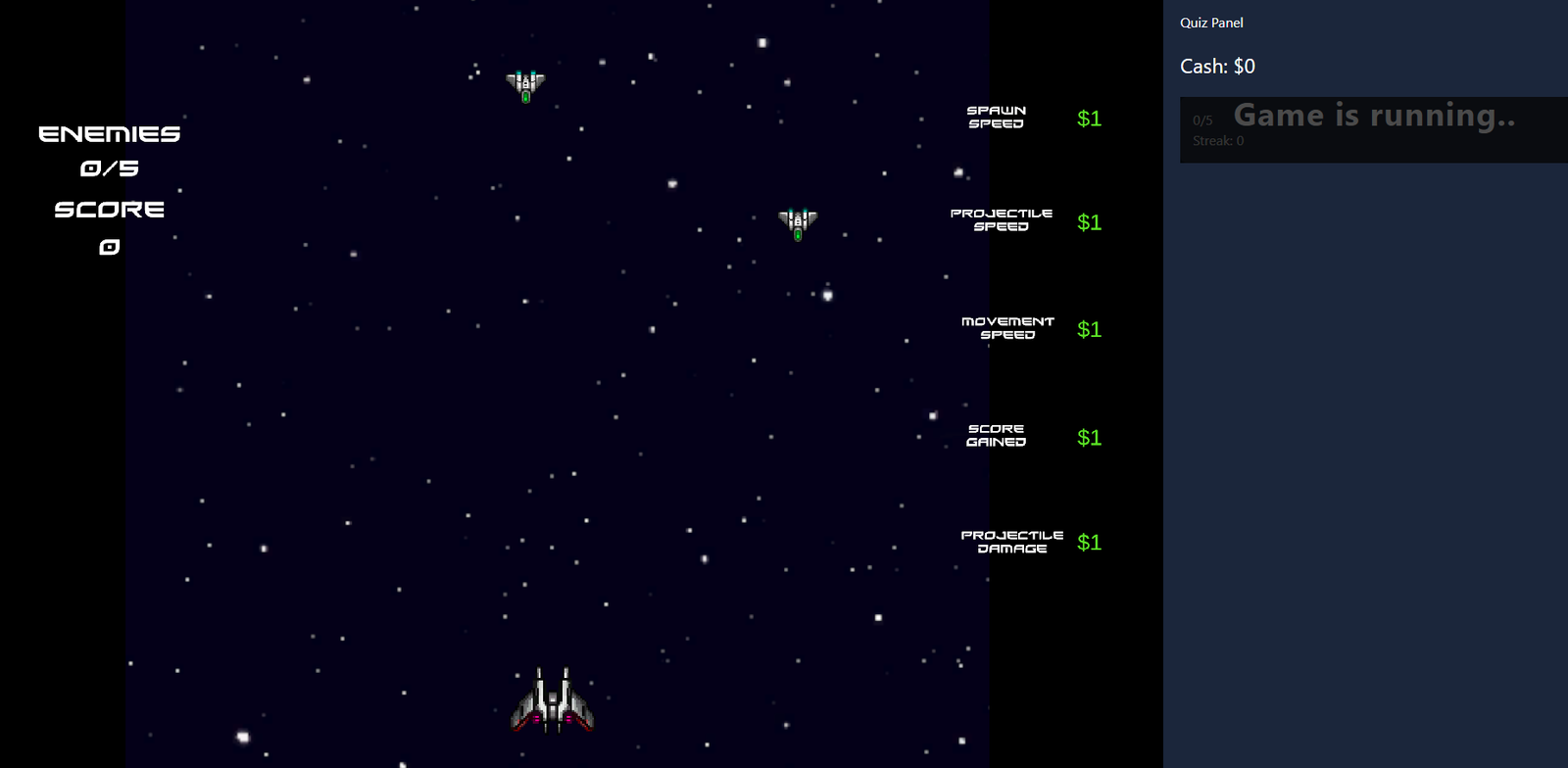
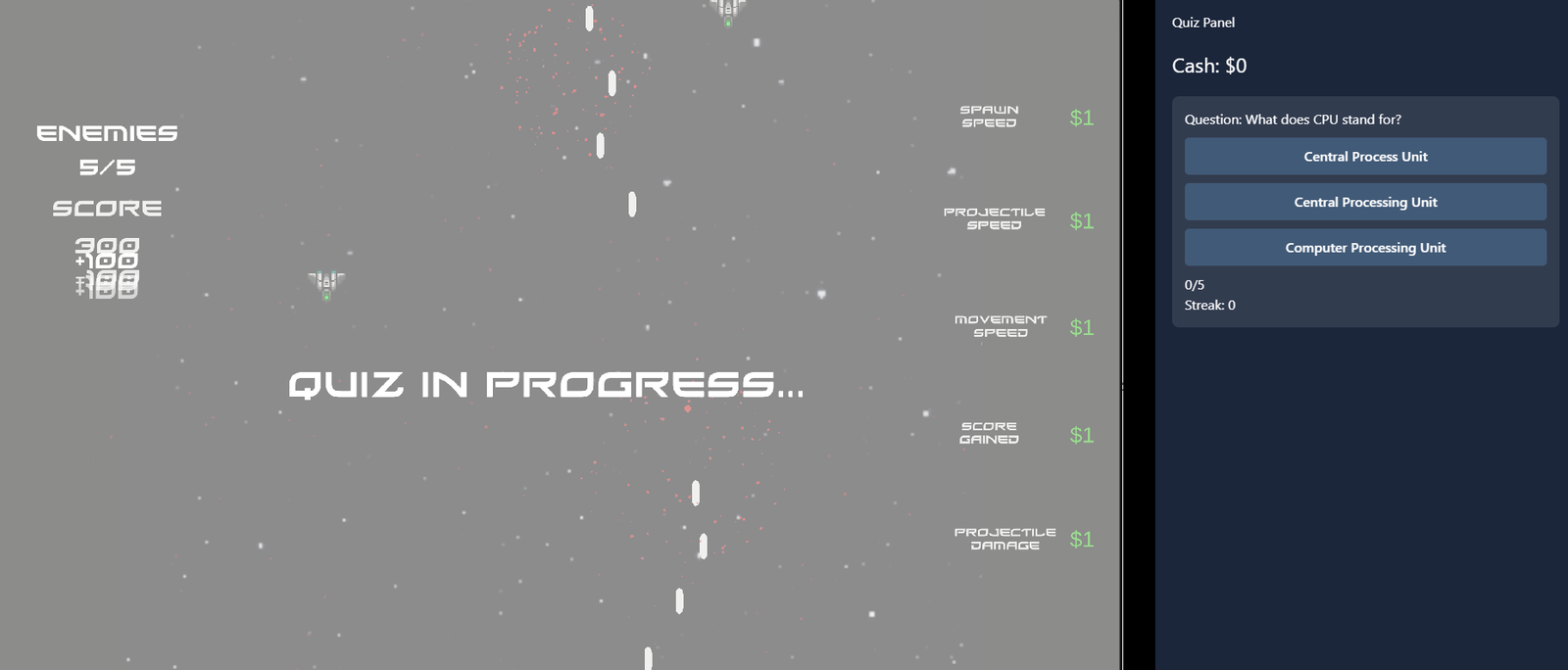
The further you progressed, the harder it got. More enemies, more questions, tighter margins. It was designed to keep players on edge while quietly making them learn.
The Teacher Side
While players were fighting for survival, teachers had a real time updating leader-board giving them a live view of how the entire class was performing. Engagement was visible, progress was track-able, and no one wanted to be at the bottom of that board.
What It Taught Us
This project was proof that a good game-play loop can make almost any content engaging. It also gave us our first serious exposure to full stack JavaScript development, real time communication between client and server, and the chaos of building something collaborative under a deadline.
It was messy, educational, and genuinely fun to play. Exactly what it was supposed to be.